
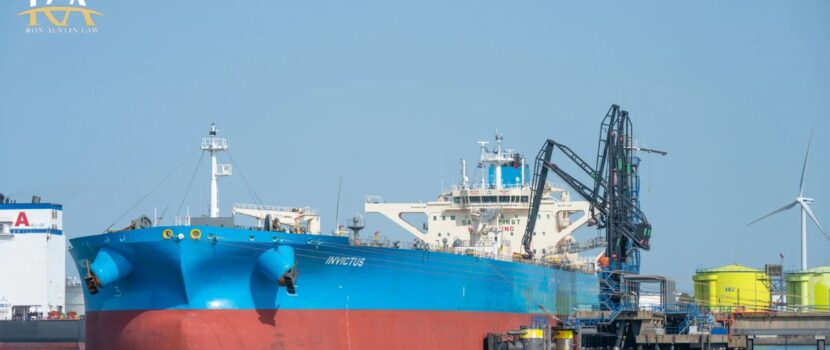

On Friday afternoon, a tanker hit a riverboat full of passengers at the Port of New Orleans, and some of the people aboard ended up in the Mississippi River. If you were on that boat, have family who was, or work on the water and watched the footage with a knot in your stomach, you’re probably asking who is responsible and how much time you have to act.
After a New Orleans maritime accident, injured passengers and crew can bring claims against the vessel owners whose carelessness caused the crash. Federal maritime law sets its own deadlines, though, and a passenger ticket can require written notice of your claim within 6 months of the injury.
The attorneys at Ron Austin Law handle offshore injury and maritime accident cases from our Harvey office on the West Bank. We can look at what happened to you and explain where you stand.
Key Takeaways
- The tanker Atlantic Asphalt struck the docked American Cruise Lines riverboat American Heritage at about 12:30 p.m. on November 13, 2026, with about 129 passengers aboard. The cause is under investigation.
- Federal maritime courts presume that a moving vessel that hits a moored vessel is at fault unless its owner can show otherwise.
- A passenger ticket can cut your time to 6 months for written notice of a claim and 1 year to file a lawsuit.
- Vessel owners often file a federal limitation of liability case soon after a crash, and everyone hurt must file a claim by the deadline the court sets.
- The August cyberattack on the Texas-bound tanker VL Prosperity shows that a ship’s engine and navigation systems can now be reached remotely, which raises new questions about who is responsible when those systems fail.
If you were hurt on the water, Ron Austin Law offers a free consultation to talk through your options before any deadline passes.
What Happened at the Port of New Orleans on November 13
At about 12:30 p.m. on Friday, November 13, 2026, the asphalt tanker Atlantic Asphalt collided with the riverboat American Heritage while the riverboat was docked near the Crescent City Connection and passengers were getting off. The Port of New Orleans said about 129 passengers were aboard, plus crew. Video showed the riverboat rolling onto its side as rescuers pulled people from the river, and several passengers were taken to area hospitals.
The U.S. Coast Guard closed the Mississippi River to traffic between mile markers 93 and 96 while crews responded. Officials have not said what caused the collision. The Coast Guard investigates a crash like this under its marine casualty rules, and those findings often become key evidence in an injury claim, so the people who were aboard should keep every record from the day, from medical bills to the clothes they were wearing.
Why It Matters That the Riverboat Was Docked
The American Heritage was tied up at the dock, not moving, when it was struck. Federal maritime courts have long applied a presumption, often called the Oregon rule, that a moving vessel which hits a stationary or moored vessel is at fault. The tanker’s owner can try to show otherwise, but the starting point favors the people on the docked boat.
Who Can Be Held Responsible After a Vessel Collision
Responsibility after a vessel collision depends on what investigators find, and more than one company can share it. Under general maritime law, each party pays its share of the fault, so a claim isn’t lost just because blame is spread around.
The tanker’s owner and operator
The company that owns or operates a tanker is responsible for a careless crew, a poorly maintained vessel, or unsafe decisions about speed and position in a busy river bend. The National Transportation Safety Board found that a 2021 tanker grounding in New Orleans came from a pilot’s decision to pass another vessel in a river bend during high water, which shows how much the river itself shapes these cases.
The riverboat’s operator
A cruise operator owes its passengers reasonable care under the circumstances. That covers safe boarding and disembarking, working life jackets, and a crew trained to get people off a vessel in an emergency.
Other parties
River pilots, terminal operators, and equipment makers can also share fault, depending on the facts. Ron Austin Law obtained a landmark $1 billion judgment against Exxon Mobil, and that experience matters here, because shipping companies and their insurers bring large legal teams to collision cases.
Deadlines That Can Cut Off a Maritime Injury Claim
Maritime injury claims run on federal deadlines, and some are much shorter than people expect. These are the ones to watch:
- Passenger ticket notice: under 46 U.S.C. Section 30526, a passenger vessel operator can require written notice of a claim within 6 months and a lawsuit within 1 year.
- Limitation of liability: under the Limitation of Liability Act, a vessel owner can ask a federal court to cap its liability at the value of the vessel. The court then sets a date by which every injured person must file a claim, and missing it can end yours.
- General maritime claims: most injury claims under federal maritime law must be filed within 3 years, if no shorter limit applies.
Limitation cases are often filed in the U.S. District Court for the Eastern District of Louisiana for crashes on this stretch of the river. A New Orleans maritime accident attorney can track each of these dates from the first week, and Ron Austin Law can review your ticket and the court filings with you at no cost.
What Happens When Hackers Get Into a Ship’s Systems
Ship cyberattacks moved from theory to fact this year. In August 2026, the Coast Guard and FBI boarded the Texas-bound supertanker VL Prosperity after finding signs that its network had been compromised. Iranian state media claimed hackers reached the engine room, changed engine speed, and cut cooling flow, and federal investigators later looked at a second Texas-bound tanker, the Kohaku. The U.S. has not named who was behind it, and the Coast Guard reported no physical danger to the crew.
There’s no sign that hacking played any part in the New Orleans collision. Still, the Texas case raises a real question for anyone hurt on a vessel, which is whether a ship whose controls can be taken over remotely was safe to operate. Since July 16, 2025, the Coast Guard’s cybersecurity rule for the marine transportation system has required U.S.-flagged vessels to keep a cybersecurity plan and name a cybersecurity officer, on a phased schedule the Coast Guard has published. As those requirements phase in, a company’s cyber safeguards are likely to come up in any injury case where a vessel’s systems fail.
Rights of Crew Members Hurt in a Vessel Accident
Crew members have different rights than passengers. A seaman hurt on the job can sue an employer for negligence under the Jones Act, claim unseaworthiness if the vessel or its equipment wasn’t fit for its job, and receive maintenance and cure, which pays daily living costs and medical care until recovery stops improving.
Dock and harbor workers who were on shore usually fall under a separate federal compensation system. A New Orleans maritime accident attorney can sort out which rules apply to your job, since that decides what you can recover.
Frequently Asked Questions
Should I give a statement to the cruise line’s or the tanker company’s insurance company?
You don’t have to, and it’s wise to wait. Anything you say in a recorded statement can be used to argue your injuries are minor or that you share the blame. Talk to a lawyer first, then decide.
Does it matter if my cruise ticket had a liability waiver?
Usually not for injuries caused by carelessness. Federal law bars passenger vessel operators from using ticket terms to escape responsibility for injuries their negligence causes. The notice and filing deadlines in the ticket can still apply, so read them closely.
Will a vessel collision case be heard in state court or federal court?
It can be either at first. Maritime injury claims can often be filed in state court, but once a vessel owner files a limitation of liability case, claims are usually pulled into federal court in New Orleans. Your lawyer will file where the case has the best footing.
How long does a maritime collision case take?
Expect at least a year. The National Transportation Safety Board’s report on the 2021 Bow Tribute grounding in New Orleans came out about 13 months after the accident. Many cases wait on those findings before serious settlement talks begin.
Can my family bring a claim if a loved one died in a maritime accident?
Yes. Families of passengers and workers killed on the water can bring wrongful death claims under federal maritime law, and Louisiana law can add to those rights in some cases. These claims have the same tight deadlines, so it helps to start early.
Ron Austin Law: Your Maritime Accident Law Firm
If you were aboard the American Heritage, lost someone on the water, or were hurt working on a vessel, you shouldn’t have to sort out tickets, federal deadlines, and insurance calls while you’re still recovering. One thing we see often is that the vessel owner files a limitation case within weeks, and the claim deadline it sets can arrive before people even know the case exists (so we watch the federal court filings from day one).
Our attorneys bring a combined 88 years of legal experience to cases like these. Contact our firm today for a free consultation, and we’ll walk through what happened and what your options look like.